Thursday, July 15, 2010

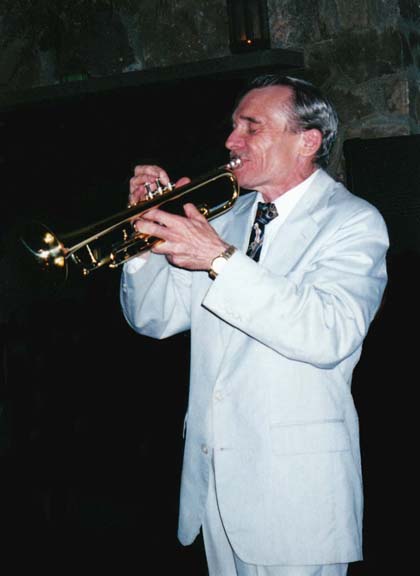
Wingy Manone- Dinner for the Duchess (1940)

Joseph "Wingy" Manone (1900-82) was one of the great characters of traditional jazz. Wingy, a New Orleans native played a rough and ready style of trumpeting and vocalising highly influenced by Louis Armstrong.


Like fellow New Orleans trumpeter Louis Prima, he included humor and entertainment as part of his jazz presentations. Wingy lost his right arm in an accident while still a youngster. He learned to play trumpet with a prothesis arm that didn't detract from his proficiency. Wingy learned his trade with many territiry bands of the 20s and 30s. By 1934, he had started a long and succesful series of small band recordings that were in the style and feel of those of Red Allen, Fats Waller, Teddy Wilson and Lionel Hampton .where rotating jazz greats supported Wingy's horn and vocals on jazz standards and pop tunes of the day.

The early Manone sessions were issued on various labels such as Banner, Vocalion and Columbia. By 1936, Wingy's sessions were recorded for the Bluebird label. The session of August 6, 1940 recorded in Hollywood has an interesting mixture of tunes and personnel.
Wingy was working on the film Rhythm on the River with Bing Crosby. (he was a frequent guest on Bing's radio shows).He had a good role as musician/sidekick to Bing. His band in the film also featured Bing's old Rhythm Boys partner, Harry Barris. Two of the tunes from the movie were recorded at this session which had Wingy backed up by some fine Hollywood studio men.

The band featured Bill Covey on clarinet, he had worked with Gus Arnheim and Spud Murphy.
Babe Bowman on trombone was primarily a studio man(he was on Artie Shaw's Frenesi session).
Pianist Stan Wrightsman would become a much indemand player for trad and swing dates around Los Angeles. He had already recorded with Santo Pecora, Spike Jones, Shaw (the Frenesi session) and was with Seger Ellis' band for a time. The other men, Bill Jones (bass), Dick Cornell (drums) and Russell Soule (guitar) were all studio players.

Rhythm on the River and Ain't it a Shame about Mame were from the film written by Johnnie Burke and Jim Monaco. In the film River gets a great treatment by Bing backed by Wingy's band. In the scene, Bing is bailing out the Manone band's instruments at a hock shop. Bing shows off some fancy work with drumsticks. (he started his musical career as a drummer).
Wingy's version starts with a Loui-ish intro over sustained chords into the ensemble with a crisp lead by Wingy. Cornell gets off nice rim shots and cymbal splashes thruout. Stan leads into Wingy's happy vocal. Covey gets a nice tangy clarinet spot followed by an arranged riff chorus and the descending riff used in the movie as a coda.

Mame, sung in the film by Mary Martin with the Manone band is an interesting major to minor pop tune with a rhumba passage as a bridge. The opening ensemble is again crisp, Wingy always played solid, swinging leads. Stan brings in Wingy's vocal. He does a nice job navigating the tricky melody. Covey gives us more solid clarinet followed by a band reprieve of the rhumba. The rideout has solid Wingy with a Louis-ish coda followed by a vocal coda with nice guitar chording.
A lovely side!

Dinner for the Duchess(Dale-Kaye) is the highlight of the session. The opening and closing has Wingy playing a catchy horn riff. He tells one of the boys that" he's blowin' for the Duchess."
The band plays a neat arranged blues riff leading into Wingy's vocal full of referances to food and jazz that please the "Duchess". The solos have Wingy's great comments (like Fats Waller, he a master at this). Covey has another reedy, driving solo. (this man played fine clarinet). Bowman gets off a nice percussive solo with some Jack Jenney touches. Stan's piano is very Bob Zurke-ish and gets a choice mention from Wingy. The swinging out chorus features some of Wingy's Up the Country licks( a favorite blues) and back to the trumpet coda. A minor classic!

When I Get You Alone (McCarthy-Goodwin-Fisher) is a simple but pleasant pop. It has a folk or cowboy feel to it. (not unlike some of vocalist Dick Robertson's Decca sides). After a band chorus Wingy gives us a fun vocal assisted by bassist Jones. (we assume so because the bass is silent during the comments). Covey and Bowman split a chorus (nice lip trills on trombone) and Stan has a nice stride solo a la Zurke. Wingy leads the band home with a nice repeated riff (shades of Dippermouth Blues).

This session is just one of many great Manone small band treats of 1934-41. Wingy continued recording thruout the 40s and 50s. He made albums for Decca, Roulette and Imperial and worked frequently in LasVegas. He made an appearance at the Newport Fest of 1966 (recorded by RCA) and toured Europe with Papa Bue's fine Danish band in the 60s. One of his last filmed appearances shows him with Toronto's Climax Jazz Band in 1976. (this has been on YouTube). Wingy is still full of fun and bows some nice horn passages. He left us in 1982.

The August 1940 session is available on Classics 1091 (Wingy 1940-44).
Till next time, keep Swinging and Winging!


Saturday, June 12, 2010

Forgotten Heroes of the Big Band Era: The early Vaughn Monroe Orchestra

Vaughn Monroe(1911-73) was one of the most prominent personalities of the Big Band era. With his good looks and booming baritone, he made quite an impression. However, his band never got the credit it deserved, especially the early edition of 1940-2 , the subject of this post. First, some backround on Mr. Monroe.


Vaughn was born in Akron, Ohio but raised in Cudahy, Wisconsin. He became a proficient trumpeter and despite ambitions for an operatic career, concentrated on dance band work as trumpeter and vocalist. He broke in with the Austin Wylie Orchestra in the early 30s followed by the Larry Funk band with whom he made his first recordings in 1934. In the late 30s Vaughn worked with the Boston band of Jack Marshard, also a succesful booker. Marshard realized that Vaughn had the potential to be a top-flight leader and helped him put together his first band in 1940. Also in 1940, Vaughn married his high school sweetheart, Marian Baughman. They had two daughters, Candace and Christina.

The early Monroe band spent a lot of time in the New England area and boasted many fine players from that area. Key men were Bobby Nichols (trumpet), only 18 at the time but already a mature jazz player. Trombonists Joe Connie(an uncle of baseball great Tony Conigliaro) and Art Dedrick (a succesful stock arranger). In the sax section were Andy Bagni, an exellent lead alto, Frank Levinea good hot tenor in the Tex Beneke style and Ziggy Talent (tenor) who became a top attraction with the band with his comedy and novelty vocals. Another saxist, Johnny Turnbull also sang with the band. Pianist Arnold Ross was a fine jazz soloist and arranger who later made a name for himself. The female vocalist, Marilyn Duke a tall attractive brunnete, was a superb singer with a nice jazz flair reminicent of Mildred Bailey and Lee Wiley. Much of the early Monroe book was arranged by Johnny Watson, who had given the Jan Savitt Band much of it's succesful The Monroe band spent most of it's break-in time of 1940 in the New England area. During 1941 it began playing more national venues and gaing popularity. The band's 1940-2 Bluebird recordings have many fine moments. Here are some highlights.


On August 19, 1940 Vaughn recorded There I Go, one of his earliest vocal hits. This was a nice dance chart with a pretty alto spot by Andy Bagni. At the same session the old Allan Jones showpiece Donkey Serenade got the Monroe treatment. (Artie Shaw also had a great record of it). Vaughn's vocal is straight , without being melodramatic and the band swings nicely. Drummer Hy Levinson gets in some nice tom-tom licks. A good introduction to the swinging side of Vaughn Monroe.


On Dec.9,1940 Jerome Kern's classic, The Last Time I Saw Paris was waxed. This is an exellent chart with nice woodwinds on the intro and crisp muted brass on the theme. Vaughn gets in another pleasant vocal. (he would later get more boomy and dramatic). The band picks up the vocal with a swinging rideout and nice Levine tenor spot on the bridge.


The session of Jan. 13, 1941 saw three exellent swing sides cut. The old favorite Dardanella is given a pleasant swing treatment by Watson. A tasty alto spot opens and closes the side. Along the way we get Miller-like reeds and a Berigan-ish trumpet spot by young Nichols. Vaughn joined the trumpet section on a lot of these early sides. Take it, Jackson , a Watson original became one of Vaughn's most durable instumentals. A simple riff is offset by band vocal chant with solos by Nichols(in a Harry James bag), Levine and pianist Saul Skersey.Another oldie, There'll Be Some Changes Made is a delightful chart with an opening dixieland chorus leading to one of Marilyn Duke'svocals. She had a nice jazz feel and gives us some Lee Wiley-ish vocal glisses. (nice sax figures and piano under her). Bobby Nichols takes over for a hot half-chorus before Miss Duke reprises her vocal. A Wonderful Side!


On February 17, 1941 Vaughn recorded his famous theme, Racing with the Moon. He would re-record it many times thru the years. Also waxed was a cute duet by Vaughn and Marilyn, Requestfully Yours. The intro has shades of Jimmie Lunceford. (many of the early sidesare on a Lunceford kick). This is a good swinger with crisp band work and solo spots by Levine and Nichols. Miss Duke is especially solid on this track. She was a very underated singer. A solid riff instrumental Clam Chowder was also cut that day. (many of the Monroe titles had New England referances). G'Bye Now (3/31/41) is a medium swinger with another pleasant Duke vocal and Nichols trumpet. The Jimmy Dorsey hit Yours was covered on April 21. Vaughn later recorded a solo vocal but here it's Miss Duke's number. We get a differant verse and some nice trombones on a pleasant dance chart.


Arnold Ross had joined the band in the spring of 1941 and his piano and aranging talent would be a great addition to the band. On June 30, 1941 the band cut Love Me a Little (a pleasant tune also recorded by Artie Shaw with Lena Horne). Another Lunceford-ish intro brings on muted brass and reds for the theme. Another nice Duke vocal is folowed by a band rideout. Also cut that day was one of Ziggy Talent's best novelties Sam, You Made the Pants Too Long. When he relaxed he sounded a lot like Tony Pastor. He tended to overdo the comedy and freak notes. (he had a very elastic vocal range). Ziggy's just fine here with solid band backup and nice fills by Ross. One-Two-Three O'Lairy (8/15/41), another novelty has a cute Vaughn-Marilyn duet. (Vaughn wasn't a jazz singer ,but sounded fine when not going for the operatic sound). There are more Lunceford touches of staccato brass, Ross' piano and Nichols. Doodle-La-Do-Da is another novelty but shows the band at it's swinging best! The band chants the nonsense vocal with a nice bridge by Marilyn (in her Lee Wiley mode). We also get a chase by Bagni and Levine and solid brass figures. Ross gets in a neat piano spot and there are good drum breaks for swing veteran Harry Jaeger before the band gives us a swinging rideout.

On October 17, 1941 the band cut Tune Town Shuffle (also recorded by Count Basie). The intro is similar to Lunceford's Blue Heaven and the simple riff is played by the saxes with brass on the release. Levine is in his Tex/ Georgie Auld bag and Ross gets in a tasty solo. A baritone sax can be heard in the section. Tica-Ti(11/24/41) is a novelty in the style of TiPi Tin with a cute Duke vocal with band comments and a swinging ensemble. Pretty Little Busybody (12/18/41) is a pleasant medium tempo chart with a vocal duet by Marilyn and bassist Jack Fay. The saxes are especially good here.

1942 brought the band even more popularity and the band sounded better than ever. The January 15 session gave us Honey Dear an exellent side with more of the Lunceford influence. Bobby Nichols' trumpet spot is very Berigan-like and Miss Duke's vocal is solid with nice jazz glisses (Ross' piano fills are also tasty). Levine also has a good tenor spot.
Arthur Murray Taught Me Dancing in a Hurry was a big hit for Helen O'Connell with JImmy Dorsey. The Monroe version features Ziggy Talent at his best. He sounds like a cross between Pastor and Prima and the band swings nicely thru several tempo changes. Ziggy hits one of his frak notes at the end. He could be a bit over the top. Check out his I Can't Dance from the 1944 film Meet the People. It opens the film and is pretty manic. (like Jerry Lewis with too much caffein). On February 24, the band cut one of their most popular instrumentals, Commodore Clipper (named in honor of the Commodore Hotel where the band was appearing). The Monroe-Watson original is based on the Lady Be Good changes and features nice muted Nichols, Levine a la Tex and Ross. Vaughn would revive this number several times.

In early 1942, Ray Conniff brought his trombone and arranging talents to the band. His Coming Out Party (3/11/42) is a solid riff with more of the Lunceford sound and good bones and saxes. There is an interlude similar to Sy Oliver's in Swanee River and high trumpets and tom-toms backed by the full band. Ross contributes a fine solo and the bones take the coda. All I Need is You (4/7/42) is a pretty dance chart with a lovely Duke vocal. The trombone intro and coda (a la Jack Jenney)quote a popular Monroe tune, I Ask the Stars. Vaughn also began doubling on trombone during this time.

Also worth mentioning are several titles taken from broadcasts. Harvard Square (another New England based riff) is similar to For Dancers Only and has a band vocal chant. The brass have solid staccatto phrases ( a favorite Lunceford device) and Ross and Levine get in solo spots. There's a nice drum brak before the theme reprise. The old Earle Hagen alto specialty ,Harlem Nocturne gets a great reading by Bagni who had become a top leadman. Boston Rocker is another swinging instumental. The theme sounds a bit like Hot Lips or Four or Five Times. There is nice muted brass, spots by Levine, Ross and a trumpeter (probably not Nichols). Ross' piano is very tasty in a Nat Cole style and the band has a solid rideout.

As Vaughn's vocals became more popular, the band 's specialties became less and less. Vaughn loved to feature instrumentals but the vocals would really put him over. The band carried on thru the 40s, adding a string section. Finally in 1953, Vaughn broke up the band, although he would still reform it for special occasions. The early Monroe band recieved so-so reviews. George Simon of Metronome was impressed with Vaughn, Duke, Talent and some of the soloists but felt the band was no more than a territorial favorite. Down Beat was more receptive and had many favorable reviews and print ads of the band. The 1940-2 Bluebird and Victor sides show a nicely swinging band with fine soloists and a greatly underated singer in Miss Duke. This band deserves a bigger chapter in the annals of Big Band history.

Vaughn dabbled in many aspects of entertainment in the 50s including acting in a couple of westerns and three TV series. His show of 1950-1 also had old buddy Ziggy Talent. Another variety show followed in 1954-5 and Air Time '57 featured Vaughn and Bobby Hackett's combo. He really hit it big as a spokesman for RCA Products in the 50s. He also had an interest in a Framingham,Mass. club, The Meadows (he occasionally appeared there).
In 1958, Vaughn made an exellent lp for RCA, There I Sing/Swing it Again in which he reprised many of his hits with a top-flight studio band. Arrangements were by Irv Kostal and Bill Stegmeyer. (we caught Billy Butterfield's horn on several tracks. )There are four instrumentals, Take it, Jackson, Commodore Clipper, Cape Cod Clambake(by Stegmeyer) and a new Boston Rocker by Kostal. The band is topnotch, I think it's the same house band that recorded under the leadership of Butterfield, Urbie Green and Peanuts Hucko.

Vaughn also appeared with a studio band on the 1960 TV special, The Swinging Singing Years and on a 1965 syndicated series, The Big Bands. On this show he did his hits plus instrumentals of Take it, Jackson and Cape Cod Clambake. Vaughn even joined the band occasionally on valve-trombone. He also led bands at Disneyland on ocasion. Vaughn's marvelous musical career ended with his death in May of 1973.

Although known as a vocalist and dynamic personality, Vaughn made a big contibution to those swinging years with his first band of 1940-2. The Old Moon Racer could really Swing!

CDs etc. There was an excellent import of the early band called Requestfully Yours. You could try Ebay or World's Records. The 1958 lp is available on Collector's Choice CDs and some of the instrumental sides have popped up on Best Of LPs. The Franklin Mint lp series on Big Bands had a side of early Monroe that is worth searching for.
The 1960 and 1965 TV shows were available on VHS. They may have made the transfer To DVD (try a search). Meet the People shows up on Turner Movie Classics occasionly.


Tuesday, May 4, 2010

Lee Castle: Trumpet King of the Castle

The Big Band era produced many outstanding instrumental and jazz soloists. Many of the star sidemen became household names, themselves and many went on to be succesful bandleaders in their own right.


Such was the case with trumpeter Lee Castle (1915-90). Lee was an outstanding trumpeter comfortable in swing and dixieland settings and heavily influenced by Louis Armstrong. (what trumpeter of the era wasn't?) He worked for most of the major Big Band leaders (Shaw, Dorsey, Goodman, Miller, etc.) and is best known for his long stint as leader of the Jimmy Dorsey Orchestra. Lee was also a fine jazzman with a pure tone and driving approach to jazz. He knew his Louis and even wrote an exellent transcription of Louis' solos. This post will celebrate his illustrious career and landmark recordings.

Lee Aniello Castaldo was born in the Bronx and was inspired to study trumpet after hearing a Louis Armstrong record. Sound familiar? His brother, Charlie, also became a professional trombonist. By his teens he was working with local bands, the earlist being Paul Tremaine and Paul Bartell. In July of 1936 Lee made his first recordings with the Joe Haymes Orchestra. Haymes was an outstanding arranger and this band was made up of young, promising swing stars. On Haymes' adventurous chart of St. Louis Blues, Lee takes a nice middle register solo with a quote from Louis' Savoy Blues (the Pops influence was already present). On That's a Plenty, Lee takes a solid chorus and leads the dixieland ensemble. These short solos show an already mature jazz trumpeter.

After a short stint with saxophonist Dick Stabile, Lee joined Artie Shaw's band in the summer of 1936. This first edition of the Shaw band featured 2 trumpets, trombone, Artie's clarinet, Tony Pastor on tenor and a string quartet. It was a very musical band but didn't take off. Lee can be heard playing lead on Sugar Foot Stomp and Sobbin' Blues along with a nice open horn spot on Let's Call a Heart a Heart. Lee stayed with Shaw until July, 1937 then went with Red Norvo for a few months (no recordings).

In September of 1937, Lee began his long association with Tommy Dorsey.He would be with Dorsey on and off until early 1939 (and back for a short stint from Dec. 1939- Feb. 1940). He even spent a few months at the Dorsey farm in Pennsylvania studying with Tommy's dad, a respected brass teacher. Lee played mostly section work with Dorsey (Pee Wee Erwin and Yank Lawson were the primary jazz soloists during his stint) , although he took a respectable jazz chorus Dorsey's recording of I Never Knew in 1938. After a brief stint with Glenn Miller in early '39 (no recordings but some broadcasts may exist) , Lee joined Jack Teagarden's new swing band from April to December of 1939.

Jack had just finished a five year contract with Paul Whiteman and was eager to join the ranks of swing band leaders. Jack's big band never caught on with the public but this early edition was the finest Teagarden band. Trumpeter Charlie Spivak was a partner in the band and played lead. Lee handled the jazz solos ( young trumpeter Karl Garvin also played a few). Lee's Louis/Berigan like horn can be heard on Red Wing (a Bob Crosby styled chart), Wolverine Blues ,Beale St. Blues and Muddy River Blues to name a few. While with Jack, Lee took part in a memorable recording session that showcased his jazz abilities.

On June 26, 1939 Lee sat in with organist Glenn Hardman's Hammond Five. Hardman was a popular organist whose attempts at jazz are a bit muddy, however he brought along some of Count Basie's best men. Lester Young played tenor and added his lovely clarinet work along with rhythm men Freddie Green on guitar and Jo Jones on drums. Lee was a last minute replacement for Buck Clayton who had a strange mishap during a tryst with a married lady!
Whoever thought of Lee is not known, but he acquits himself admirarily and gives us inspired lead work and solos.
On China Boy, Lee's straight mute lead is strong and he gets in a fleet solo. The band does a walk-off retard for nice effect. Exactly like You has nice cup mute lead by Lee and a strong out chorus. Sunny Side of the Street has more Louis-ish open lead. Upright Organ Blues (how they got that one by the recording execs is amazing!) has a great 2 chorus spot by Lee with some Louis phrases right out of the Hot 5 and a classic rideout. Who has more cup mute and some nice playing with the time(another Louis device) plus a hot rideout. The old Bix classic, Jazz Me Blues gets a Scottish intro by Hardman and pretty lead by Lee, on the 2nd chorus he gets in some neat breaks. Hardman closes with a Turkey-in-the Straw quote. Lester of course is a tower of strength on tenor and his wispy, poetic clarinet is a delight. A very musical and fun session.

Lee was back with Tommy Dorsey briefly from Dec. '39- Feb. 1940, then he made the first of several trys with his own big band. Lee's fine playing, good looks and excellent musicianship made him a fine leader, but his bands of the 40s never caught on despite good reviews. (probably too much competition from Louis, Harry James, Charlie Spivak and Randy Brooks). In early 1941 he joined the excellent band of Will Bradley (co-led with Ray McKinley). Lee didn't get too many recorded solos but is very prominent on a dixieland combo called the 6 Texas Hot Dogs playing Basin St. Boogie. (Will and clarinetist Mahlon Clark are also featured). Lee gets in a gutty muted solo with quotes from Louis' Mahogany Hall Stomp. Lee also has a short solo on the full band version of When You and I were Young,Maggie.
In the summer of 1941, Lee re-joined Artie Shaw who had put together another exciting band. Hot Lips Page was the primary jazz soloist in the band, but Lee and Max Kaminsky got their share of blowing on live dates. Lee stayed with Shaw until March of 1942. After a short stint with Charlie Spivak he led his own band again. This Castle band made a few sides for Musicraft and V Disc(available on Youtube), but are hard to find. The Youtube track of Uptown Express(a majot to minor riff) shows what a swinging band Lee fronted. He gets a real Harry James feel here and also spots good tenor and clarinet solos. Lee even joins his drummer for a Sing,Sing-like duet-hopefully more sides will surface.In late 1942, Lee joined Benny Goodman for a year. The recording ban was on at this time, but Lee can be seen and heard with Benny in the film Stage Door Canteen and takes a hot solo on Bugle Call Rag. Lee was also with Benny in the film, The Gang's All Here.
This edition of the Goodman band also included Lee's brother Charlie on trombone, Jess Stacy, Louis Bellson, Miff Mole and Joe Rushton (bass sax). There are some broadcasts by the band , mostly on old lps.

During the rest of the 40s, Lee led his own bands and did some studio work. He also did some dixieland work. (he was a fine player in the traditional style). In 1950 he was back with Artie Shaw for a short stint. He was on some of Shaw's Decca sides of the time, including a Gramercy 5 session (not available for review). In 1953 Lee rejoined Tommy Dorsey who would soon be joined by brother Jimmy to revive the Dorsey Bros, band-it was actually billed as Tommy Dorsey and his Orch. featuring Jimmy Dorsey. Lee was a key player as trumpeter and assistant conductor. (he was very adept at conducting a band). The Dorsey band recorded several albums for Bell and Columbia at this time, along with many broadcasts from the Cafe Rouge and Statler Hotel. Charlie Shavers took most of the jazz solos, however Lee was always called upon for dixieland passages and occasional jazz solos. When the brothers started their Stage Show TV series(a replacement show for Jackie Gleason), Lee was very evident. Some clips have surfaced over the years. On Let's Have a Party, vocalists Lynn Roberts and Tommy Mercer are featured along with a swinging dixie chorus by Lee and the brothers. While Tommy and Jimmy talk to the audience Lee can be seen wearing headphones and conducting the band. (some of these clips are on Youtube).In 1954 Lee made a dixieland lp for the Jay Dee label (obviously sponsored by Jimmy with Lou McGarity, Peanuts Hucko, Dick Cary, Bob Haggart and George Wettling. (not available for review).

In 1955, Lee made a great session with Ray McKinley for the Grand Award label. Also present were Peanuts Hicko (clarinet and tenor), Deane Kincaide (baritone and tenor), Mickey Crane (piano), Trigger Alpert(bass) and Ray on drums and vocals. There are some nice arranged intros and interludes probably by Kincaide, an ace arranger. Ray's vocalizing is featured on Scrub me Mama (from the Will Bradley days), Hard Hearted Hannah ( a big hit for his own band), Cow Cow Boogie and Jeepers Creepers with a nice scat intro by Ray in tribute to Louis. The band also plays Royal Garden Blues and Sugar Foot Stomp. Lee's playing thruout is hot and driving. He handles the traditional King Oliver solo on Sugar Foot and also does some nice blowing behind Ray's vocals. Kincaide's baritone is also very strong and he trades some tenor fours with Hucko on Jeepers. A nice session- unfortunately long out of print.

Lee continued with the Dorseys, Tommy passed on in Nov. 1956 and Jimmy, ill with cancer tried to carry on with Lee's help. Jimmy had a surprise hit with So Rare in 1957. He had recorded three other titles for Fraternity Records ,but by the time an album was planned had passed on in June 1957. Lee finished the sessions in June with the Dorsey band. His old boss Dick Stabile was brought in to play four alto features ( he sounded a lot like Jimmy). Another old boss, Will Bradley sat in on the sessions and was featured on Speak Low. Many of the charts were from the last book of the Dorseys. Just Swingin', an Ernie Wilkins chart and Jay Dee's Boogie (a slightly altered version of Tommy's version) are highlights. Lee has some solo spots on Maria Elena, Amapola and Speak Low. The album was eventually released on Dot records. Lee also made some more dixieland sides for the small Joe Davis label in Jan. 1957. (long out of print).

Lee also played on four titles of a Miff Mole session for Steffany Records in 1958 (later reissued on Jazzology). Miff was still playing fine trombone and had old Memphis 5 colleagues ,Jimmy Lytell(clarinet), Frank Signorelli(piano) and Chauncey Morehouse (drums) aboard, along with Jack Lesberg on bass. A later session had Jack Palmer (trumpet) and Joe Dixon (clarinet). The tunes are For Me and My Gal, Exactly like You, Original Dixieland One-Step and a nice Mole original Dreaming by the River(recorded by several New Orleans bands). Lee's work thruout is crisp and driving with plenty of the Louis influence. There are some clever arranged passages and at times Lee sounds a bit like his old Dorsey buddy, PeeWee Erwin.

After Jimmy's death, Lee continued to lead The Jimmy Dorsey Orchestra. (Warren Covington had taken over Tommy's band). Lee spent the rest of his career as leader of Jimmy's band. He did a first rate job and played many of Jimmy's big hits along with some of Tommy's and his own book. The band was a working unit for many years until it became neccesary for Lee to use capable pick-up musicians along with a few key men. He did some recording with the band, but all of the lps are out of print. Included were several for Epic in 1960 and two Pickwick albums in the late 60s playing the music of Burt Baacharach and the Beatles. The last lp by Lee and the band was in 1987 on Atlantic-Dorsey Then and Now with vocalist Carole Taran.(some of these lps are available on Ebay).In 1984 Lee and the band filmed a concert at Disneyland for the Big Bands at Disneyland series. It gives an exellent example of Lee's programs with the J. D. Orch.

After the opening Contrasts played by Lee and lead alto Tino Esno we go into a big band chart of That's a Plenty. Lee's lead and solo work are excellent. He was approaching 70 years of age, but still had good chops-there are a few bad notes here and there,but many great moments.
The band appears to be California pick-up men (we spotted big band veteran Zeke Zarchy in the trumpet section), however they play the charts quite well. An instrumental version of Maria Elena follows (Lee has a nice spot) and there's more fine Castle horn on a more modern chart of Indian Summer (probably from Lee's own book).
Special guest Helen Forrest has two solo sets and Lee conducts her charts. One can see his talent as a conductor here and why he was a key man to the Dorseys. Next up is a Dorseyland Jazz Band version of Indiana (Jimmy had such a dixie group in the late 40s). Lee and a dixieland contingent get in a lively version. Lee's solid chorus has a nice quote from Isham Jones' What's the Use? This is followed by a Hits medley of both Dorseys-Lee had a right to feature Tommy's tunes,also.

Lee is interviewed by host Peter Marshall and he comes across as a personable, humorous gentleman. He talks about his history with the Dorseys,his real name and being taken for sweet bandleader Art Kassell along with using his own library to offset the Dorsey book.
What's New? is a nice showcase for his horn and another more modern chart. Jimmy's big hit So Rare is played well by Esno and we get a pleasant Sinatra-like vocal from Lee himself on All of Me. The show closes with a rousing J.D.'s Boogie featuring several crowd pleasing encores.
This is an exellent concert and perfect example of Lee's talents as a bandleader, trumpeter and host. The Disneyland series was available for a time on VHS, hopefully it will surface soon on DVD.

Much of Lee's Big Band work is available on CD , such as the Joe Haymes, Artie Shaw,Jack Teagarden, Will Bradley and Dorsey sides. The Miff Mole session is still on Jazzology Records. As always ,Amazon and Worlds Records are a good source for this material.
The two Goodman films are available , unfortunately many of the studio and broadcast lps we covered are long out of print. As we find them we will include an Addendum to this post.

Lee continued leading the Jimmy Dorsey Orch. until his health deteriated in the late 80s. He passed on from a heart attack in 1990 in Hollywood, Florida. Lee was survived by his wife, Virginia, 2 sisters and 3 brothers.For a time the band continued with other leaders including clarinetist Henry Cuesta, but has been inactive for some time.
Lee was a very talented musician and bandleader, equally home with traditional jazz and big band swing. We hope this post will bring him more of the regonition he so deserves.

Till next time- Keep Swinging.

Addendum- Since this post, I had a chance to enjoy a re-broadcast of Ray Smith's Jazz Decades radio show. Lee Castle was the subject of the hour and produced these new finds.-
From a 1943 V Disc session with Goodman a driving version of Henderson Stomp with fiery blowing by Lee. A 1950s studio date at RCA produced a lovely ballad feature for Lee's horn on Ellington's Morning Glory. The album and group name was not identified. Finally, a 1956 Dorsey Bros. broadcast from the Statler had Lee blowing great dixieland and a hot rideout on Panama.
More to come.

Recently purchased the 1987 CD of "Dorsey Then and Now" featuring Lee,the Band and British vocalist Carole Taran.(Atlantic Records).
It's a nicely produced and good sounding Big Band album,save for two awful selections.
There's a nice Dorsey Daze medley of Jimmy's hits and several old standards including Star Eyes and I'm Glad there is You featuring Miss Taron's nice vocals and tasty trumpet by Lee.
Several contemporary ballads are played tastefully,but Evil Ways and Dorsey Rap are just terrible.
How Lee got talked into doing the "Rap" tribute to Jimmy.I'll never know! (I can see Jimmy rolling over in his Grave!!!).
Still a nice album for $4 on ebay-just stop at track 8. And it's a nice final testament to Lee's great trumpeting.


Saturday, April 17, 2010

Forgotten Heroes of the Big Band Era: The Edgar Hayes Orchestra

One of the finest and most overlooked black bands of the swing era was that of pianist/arranger Edgar Hayes (1904-79). Hayes, an exellent pianist had stints with Fess Williams and his own groups in the 1920s. From 1931-6 he was a key member of the Mills Blue Rhythm Band as pianist, arranger and sometimes musical director.Hayes, along with saxophonist/arranger Joe Garland had a lot to do with the success of the Mills band. In 1936, he left Mills to form his own band and took Garland with him among other Mills sidemen. Although the band was only active for 5 years, it became extremely popular and it'a recordings for Varsity and Decca show an excellent, musical unit.

The band had a crisp, light swinging sound with some of the Jimmie Lunceford two-beat feel. Garland frequently used himself on bass sax and Crawford Wethington on baritone to create a deep, low register reed sound. (this voicing had been used on some of the Mills recordings. The band had many excellent soloists, not household names but very capable jazzmen. Among the standouts were trumpeters Henry Goodwin and Leonard Davis(a very underated trumpeter, his work with Eddie Condon's Hot Shots is superb),trombonist Bob Horton(a marvelous plunger player),clarinetist Rudy Powell(best known for his 35-6 sides with Fats Waller) and drummer Kenny Clarke. Clarke would soon be one of the pioneers of Bop, his solid work on the tubs and vibes are a highlight of the Hayes recordings. Many other veteran jazzmen passed thru the band including Clyde Bernhardt, Jelly James,(from the Fess Williams band),Shelton Hemphill,Bernie Flood,Elmer James and Al Skerritt. All these men were solid pros with much experience in the Big Band style. Here are some highlights of their recorded legacy.

At the band's first session for Variety (3/9/37) they recorded two vocals by Orlando Roberson and an exellent instrumental, Manhattan Jam. The theme is a semi Tiger Rag clone and has fine solos by Goodwin, Horton and clarinet by possibly Garland. Clarke's drums are very prominent and the band ends with a walk-off-a retard meant to walk the dancers off the floor.

The rest of the Hayes sessions were for Decca. On May 25, 1937 several standout instrumentals were waxed. The Hayes version of Caravan is a good one with a mystic intro, bass sax (Garland) and Goodwin's growling trumpet. Also featured are Powell's raspy clarinet, Garland's tenor and Horton's Tricky Sam-like growling. The coda features more of the low reeds against plunger trumpet. Edgar Steps Out by Goodwin has Hayes' stride work up front, low reeds and clean, swinging brass. Goodwin's buzz mute solo is reminicent of Rex Stewart and Clarke gets in some tasty breaks. Joe Garland's Stompin' at the Renny is a nice medium swinger a la For Dancers Only(Lunceford). Goodwin, Powell, Garland and the boss take solos. The trombone spot may be by Jelly James or Clyde Bernhardt. (the band was very strong on trombonists).

On July 27 the band cut a nice version of Laughing at Life (previously recorded on May 25). Trumpeter Bernie Flood takes an amiable vocal backed by the band's glee club (a la Marie). There's a nice sweet trombone spot along with the low reeds and a break for Clarke. Larry Clinton's Satan takes a Holiday contains elements of the stock arrangement but gives the usual drum breaks to Clarke on vibes. There are some nice clarinet-led reeds along with Garland and the boss.

The band also fielded a combo within the band inspired by Benny Goodman's units. On Sept. 7 the Edgar Hayes Quintet (Powell's clarinet and rhythm) waxed three pleasant sides. White vocalist Bill Darnell took the vocals (he sang with Red Nichols and Bob Chester and later had a succesful solo career). There are plenty of spots for Clarke's vibes (not far behind Lionel Hampton), Powell's tangy clarinet and the bosses' piano. Guitarist Andy Jackson lays down great rhythm on these sides. So Rare, Love Me or Leave Me and Blue Skies are all lovely sides.

The session of October 11, 1937 featured the full band and quintet. Darnell sang with both units.
Queen Isabella by Chu Berry is a similar followup to his Christopher Columbus. The Hayes rendition is a smooth medium swinger with Goodwin getting in some Louis-ish horn, Garland's tenor and more of the low reeds playing against the brass. The Dick Whiting-Johnny Mercer novelty Old King Cole gets a unique reading by Hayes and Co. Garland's bass sax and Horton's growling trombone are prominent along with plunger brass and Darnell's amiable vocal. The coda returns to the bass sax/trombone combination. The quintet and Darnell returned for three selections. The highlight is the old favorite, When You and I were Young Maggie featuring Clarke's Hampton-like vibes prominently.

The next session on January 14,1938 is a strong one. Meet the Band, a Garland original features the low reeds against brass riffs. Powell, Hayes, a shouting Goodwin and nice Clarke rim shots are highlights with the bass sax on the coda. Fugitive from a Harem opens with approriate mystical sounds, the main theme has a Larry Clinton-like sound with clarinets prominent. Garland's tenor reminds one of Gene Sedric of Fats Waller fame and Goodwin has a potent spot.
Edgar's own Swingin' in the Promised Land is a brisk swing riff with low reeds backed by Clarke's drumming. Horton gets in some more growl bone along with some high flying trumpet by Goodwin or Davis(himself quite a high register man). The low reeds return for the out chorus.
Clarence Williams' Barbary Coast Blues is an exellent side, Earlene Howell's vocal is very nice with touches of Ella. The boss gets a piano spot, more of Clarke's vibes and a nice sax soli and ensemble before the vocal reprise.

The next session was on Feb. 17,1938 and featured two Hayes favorites. In the Mood, written by Garland was first recorded by Mills' Blue Rhythm as There's Rhythm in Harlem. This version has most of the Blue Rhythm routine. The saxes have the familiar lead strain and there are solos for Goodwin and Powell. The low reeds are featured on the out chorus with Hayes piano playing off the band on the coda. The familiar brass crescendo was added by Glenn Miller. When Garland went with Louis Armstrong's big band he brought this chart and added the Miller ending. The Hayes version is one of the best of this swing classic. Star Dust became a surprise hit for Hayes. It's a straight dance arangement with flowery Carman Cavarello-like piano by Hayes.It became a signature tune for Edgar and henamed his later groups the Stardusters.
Help Me has Goodwin's buzz mute horn sounding like Fats' Herman Autrey along with good vibes work. Without You has an exellent vocal by Clyde Bernhardt (sounding a lot like Lips Page). Clyde also gets a nice trombone spot along with a clarinet/drum duet. The session closes with Will Hudson's Sophisticated Swing. The chart sounds like Will's stock with a few changes. Muted brass and sweet trombone are featured on the ensemble and Edgar gets in some more of his florid runs. A pretty dance chart.

In the spring of 1938, the Hayes band toured Scandanavia. While in Stockholm, a small contingent recorded as the Kenny Clarke Kvintett. The personell was Goodwin, Powell and the rhythm section(Eddie Gibbs was now on guitar) with James Anderson the band's vocalist.
These sides are pleasant small band swing, sounding a bit like Adrian Rollini's swing groups with a touch of the Fats Waller Rhythm. Clarke's vibes are heavily featured. Sweet Sue an instrumental has fine solo work with an original outchorus riff. I Found a New Baby has Powell on Alto(his alto sound was very smooth), Gibbs' guitar chording reminds you of Fats' Al Casey, some nice stride by Edgar and a "Hold Tight" riff. Once in a While and You're a Sweetheart are nice medium tempo ballads. Anderson's vocals are very much in the Bill Kenny Ink Spots tradition. A very nice session.

Edgar kept the band going until 1941 (Dizzy Gillespie had a short stint with the band). He settled in California, leading and recording with his Stardusters group. In the 50s and 60s he concentrated on solo work around Southern California. He died in Riverside, CA. on 6/28/79.
The Edgar Hayes band was a very musical and swinging band, certainly deserving more attention than it got in it's day.The arrangements of Hayes and Garland along with the exellent array of soloists really make this group one that should be heard by jazz and swing fans. Here's hoping that this post will inspire more people to seek out and enjoy their fine recordings.

The Classics label has two CDS, # 730 and 1053 that encompass all the Hayes output, including his later sides.


Tuesday, April 6, 2010

The Three Stooges- Outer Space Jitters (1957)

This Stooge post will take a detour into the "dreaded" Joe Besser period. Diehard Stooge fans hate these episodes, although with the passing of time I've found some redeeming episodes and even grown to enjoy some of Besser's performances. This short is one of the better of the 1957-9 entries and the funniest of their "sci-fi" trilogy. We will also celebrate the upcoming completion of Sony's Three Stooges Collection. In June of 2010, all the Stooges shorts will finally be available on DVD.

Joe Besser was a talented comic and his work with Abbott and Costello, Milton Berle and on the Joey Bishop Show bear this out. He was working at Columbia in his own "shorts" series when tapped to become the 3rd Stooge. His whiny "not so hard" sissy character never seemed to jibe with Moe and Larry's "stooge" characters.. The team seemed more like the Two Stooges plus Besser.
Besser had his own contract and had a clause written in prohibiting the usual "Stooge punishment" doled out by Moe. As the shorts progressed, Joe did take some slaps and bumps and eventually developed more chemistry with Moe and Larry. This breezy short is lots of fun and Joe doesn't detract from the fun, rather adding some good bits of his own.

The film benefits from a great cast. Just about all of the Stooge regulars of the period appear. (Such stalwarts as Vernon Dent, Christine McIntyre and Kenneth MacDonald had left Columbia). Present here are Emil Sitka playing his "professor" character, Gene Roth(Mr. Borch), Phil VanZandt and Joe Palma(the "Fake" Shemp) as bad guys, Diana Darrin, Harriet Tarler and Arline Hunter as the "babes" and a pre- Bonanza Dan (billed as Don) Blocker as the Goon!

The "Plot" has the boys as assistants to Professor Jones who land on the planet Sunev ( This planet was also used in Space ship Sappy) to study the planet and it's inhabitants. The Grand Zilch (Roth) and his henchman the High Mucky Muck (VanZandt) plan on developing a race of Zombies to destroy the world! (sounds like a familiar 50s sci-fi premise). Along the way the boys meet 3 Sunevian girls, eat a delicious meal of clam shell and battery acid, rescue the kipnapped professor and battle the baddies and the goon! (Blocker).

The film directed by the one and only Jules White and written by his brother Jack has a cute, breezy quality to it. The boys go thru their paces as only old comedy pros can and even the added "distraction" of Besser doesn't deter from your enjoyment. Comedy highlights include the boys' entrance with Emil wearing derbies on top of their space helmets (the boys are dressed in cute trenchcoats with bowties). When introduced to the Zilch we get one of their patented verbal responses- Bewithched-Bothered and Bewildered complete with pug for Pal Joey from Larry. (also a Columbia release). It turns out that the Sunevians survive on battery power and the Zilch shows Emil one of his Zombies (Blocker) along with his plans to destroy the world!

The boys are introduced to 3 Sunevian girls by the Mucky Muck. Their electric kisses charge Moe and cook up Larry's gift of popcorn and Joe's frozen chicken! The boys sit down to a meal with the Muck and the girls. Here we get the old bit of trying to eat the clam shells complete with goofy faces. When they are told of their fate, Moe gives the Muck a blast of his hot water bottle, shorting his circuit! Two of the girls, Diana Darrin and Harriet Tarler were regulars from the early 50s. ( fans will remember Diana as Miss Lapdale in 1952's He Cooked his Goose). Miss Hunter was a Playboy Playmate.

The boys take off in search of the professor who has been tied and gagged.Moe takes Joe by the hand like a little kid(which he was). We get the old running into the Goon bit complete with nnahhs. At one point the Goon is standing behind Moe and Larry and Joe's frightened yelps are mistaken for a game of charades. Moe quickly loses the boys again and after mistaking the goon's grunts for Joe and Larry ("Quick snorting down my neck"-"You should try Bicarbinate" reacts with a great scream and hair flying in the air (the old blow-dryer bit).

Finally finding Emil , the boys untie him and undo the rather long gag accompanied by Larry's stock quotes of Anaconda-ponder and Tsimmus Inc. (earlier we met Capt. Tsimmus) , fond bywords from earlier shorts. Emil and the boys proceed to destroy the Zombie machine giving Moe a chance to reward Larry's backswings with a hammer and plane to the head! (Joe wouldn't be a part of this). The monster is destroyed when his juice is turned off and Dan gets his one big line- a death groan! Joe inadvertadely conks te Zilch with a pantful of gold he is stealing from the Sunevians and Emil and the boys make a hasty retreat for their ship. (Joe is real whiny with his cries of Let's get outa here!).

The epilogue is a good one-The boys have been telling the adventure to their infant sons. (via trick photography-they did this a few times with Shemp). When the baby sitter arrives( and suggests a nice restaurant) she has a Goon face and buck teeth (like Blocker). When the boys get a look at her they do the tried and true nnaahh! and jump out the window! Moe gets in an extra nnaahh! for good measure before his leap!


Although the film is full of patented routines and takes it moves along nicely and Joe is fairly easy to take. Besser himself suggested the boys change their stock haircuts(a bad idea). In this one Moe retains his bangs but Larry slicks his back. Most of the Besser episodes were either complete misfires (the two"talking horse" entries , Joe's darling Fifi and Muriel Landers as Tiny hit the bottom of the barrell ) or like this one, bearable. Many Curly and Shemp comedies were remade with much stock footage. (and even some stock guest appearances by them!). I also enjoyed Guns a Poppin', a remake of Idiots DeLuxe with an added confrontation with bank robber Mad Bill Hookup . Quiz Whizz and Pies and Guys also are pretty decent. (the later makes use of several stock pie fights). Greta Thyssen, a former Miss Norway appears in the aforementioned films along with the final Stooges short, Sappy Bullfighters. She was a gorgeous, voluptous girl and had good chemistry with the boys. It appears that the studio was trying to create a new leading lady for the boys- a la Christine McIntyre. Although the Stooges shorts ended with the 1959 releases,(already filmed in 1957) they would soon gain new popularity with the release of the shorts to TV. Besser left the team (his wife was ill at the time) and veteran comic JoeDeRita tok over as Curly Joe. (he had made a few shorts for Columbia in the late 40s). DeRita was a more genteel Stooge (which suited the mood of the 1959-65 feature films by the "mature" Stooges) and was better suited to the role than Besser.

The Big news is that on June 1 of this year Sony will finish their exellent Three Stooges Collection with the release of Vol. 8.(consisting of the 1955-6 Shemps and 1957-9 Bessers) After years of collecting VHS and incomplete DVD sets ,we now have all 190 Stooges shorts on high quality digital disc. I myself spent years taping episodes off TV on VHS tape and what a pleasure it is to have the entire Stooge catalog at my disposal on DVD. I know I echo the sentiments of fellow Stooge fans and we all applaud Sony for sticking with the series and finishing it. (many VHS collections never got further than samplers).


Till next time- Keep Stooging, but Not so Hard!!!


Sunday, March 14, 2010

Young Man with a Horn (1950)

Our latest installment in the Hollywood Jazz Movies series is a longtime personal favorite, Young Man with a Horn. As a kid getting into the trumpet and jazz music this film left a big impression.

As I grew older I could see the corny Hollywood treatment of a take on a Bix Beiderbecke-like trumpet star. However the film still holds up and has a wonderful musical score by Harry James, Doris Day and the talents of Ray Heindorf and his great studio orchestra.

The film's origins were first in a series of articles by Otis
Ferguson, one of the first writers to cover jazz. He wrote two pieces on Bix Beiderbecke for the New Republic titled Young Man with a Horn followed by Young Man with a Horn Again. Writer Dorothy Baker borrowed Ferguson's title for her 1936 novel of the same name. Her novel followed the triumphs and downfall of a Bix-like jazz cornetist named Rick Martin. The transfer to film was proposed several times but finally made by Warner Bros. in 1950. The original choice for the trumpet ghosting was Bobby Hackett. Bobby would have been perfect with his melodic , flowing style in the Bix tradition. The studio decided on the bigger name and went with Harry James who provides wonderful playing even if it's not very Bix-like. (Ironically, when Rick first plays with Smoke we hear some Bixish changes and runs from Harry. After that he sticks to his own style).

The film was produced by Jerry Wald and directed by one of Warner's top men Michael Curtiz (Casablanca) with screenplay by Carl Foreman and Edmund North based on the Dorothy Baker novel. Ray Heindorf was Musical Director and came up with some great orchestrations along the original song Melancholy Rhapsody. James was also listed as Musical Adviser and Trumpet Soloist.
The exellent cast was headed by Kirk Douglas as Rick, Doris Day gave a fine performance as vocalist Jo Jordan. Lauren Bacall plays the dark, troubled Amy North who is briefly married to Rick. Hoagy Carmichael plays Willie "Smoke" Willoughby, a pianist and friend of Rick's. Hoagy's casting is perfect as he was a close friend of the real Bix.(he narrates the story). Other key roles go to Mary Beth Hughes as Rick's sister Marge, Nester Paiva as clubowner Louis Galba, Jerome Cowan as bandleader Phil Morrison, Orey Lindgren as the young Rick and Juano Hernandez as Art Hazzard, Rick's musical mentor. The time line runs from the 20s to the 40s.

The story follows the life of Rick Martin who as a youngster has lost his parents . Rick is living with his sister Marge , who hasn't much time for Rick. An early incident mirrors the real story of Bix. Rick finds he can pick out tunes on a piano by watching a pianist playing hymns at a local mission. Bix himself showed an early talent for piano without any formal training.
While working as a pinboy at a bowling alley Rick hears the sounds of a jazz band at a nearby bistro. Here he meets Art Hazzard, a talented black trumpeter and a genial man who takes an interest in Rick. The Art-Rick relationship is not unlike the one that Louis Armstrong enjoyed with King Oliver. Rick loves the sound of the trumpet and Art buys him a used horn and teaches him the rudiments.(Fellow musicians love his warning of getting a Roll-bad placement of his trumpet embrochure) From there on Rick is sold on the life of a musician despite Art's own misgivings on the profession.

We follow Rick's progress as he works his way up from kid bands to carnival shows and jazz bands. Kirk Douglas steps in as the adult Rick who has been hired by Bandleader Jack Chandler(Walter Reed)..
Chandler's band is a typical "sweet" band of the period . Here Rick meets Chandler's pianist Smoke and Jo the female singer. Rick finds a fast friend in Smoke who knows Art Hazzard and loves to play jazz. Jo is also taken by the slightly wayward newcomer. Chandler isn't into jazz. At Rick's first rehearsal with the band he thinks he can ablib during Jo's vocal. This prompts Chandler to read Rick the riot act- No Blues or Low-Down Jive! Jo who has been dating Chandler is taken by Rick and a romance starts to blossom. Rick's stint with the band ends when he, Smoke and a few of the boys jam a tune in Chandler's absence. (a spirited Get Happy by Harry and some of his Boys). Althogh Smoke doesn't get fired he decides to stick with Rick and they job around the country. (these scenes are shades of Hoagy's midwest days with Bix).

Eventually Rick finds his way to New York City where he sees Jo, now a singing star. Rick asks about Art who is playing at a little club called Galba's. Rick meets Jo there who tells Rick that Art doesn't play like he used to. (the soundtrack horn by Zito is very Louis-ish-not exactly past his prime!). Rick sits in with Art and they have a happy reunion. Phil Morrison, a big name bandleader is at the club, he likes what he hears and on Jo's recomendation hires Rick for his large commercial orchestra. Rick gets Smoke a job in Morrison's band too and for a while things are fine. (Rick is featured with the band but not on pure jazz numbers). The Morrison character is based on Paul Whiteman who featured Bix heavily in his symphonic jazz orchestra.

Soon Rick is spending his free time at Galba's jamming with Art, much to Morrison's dismay. The club is packed and Morrison thinks Rick is keeping Hazzard's job for him. One night Rick runs into Jo and a girlfriend Amy North, a very attractive but dark and troubled girl.Despite Jo's warnings, Rick and Amy begin an affair and eventually marry. Here the dramatics get very heavy as the odd-couple marriage slowly deteriates with Rick out all night and Amy trying to find herself with various classes by day.( I love the scene of Rick playing his Art Hazzard records while Amy tries to sleep!) The job with Morrison starts to strain too. Eventually Rick starts drinking and forgetting about Art.Things blow up with Morrison and Amy and when Art tries to help a drunken Rick out(he's lost the job at Galba's) Rick lashes out at him. Art gets hit by a car trying to cross a street and Rick is devastated. Rick gets to the hospital too late but plays Art's horn at his funeral service. These scenes are a bit heavy handed but still effective.

The plot gets even heavier as Rick drowns his troubles in booze. At a recording session with Jo and Smoke Rick, gets hung up on a high note and keeps blowing and missing until he breaks down. (although played seriously, this segment is very funny!). The band members file out of the studio, one uttering "He's all Washed Up!". Jo and Smoke try to console Rick but he kicks them out and promptly breaks his horn over a table in a fit of rage!
Finally we get the required "pathetic" scenes of Rick wandering around the city in a stupor. He picks up an old battered horn at a hock shop-sort of a security blanket to have under his arm. Rick winds up in a seedy drunk hospital only to be rescued by his true friends, Smoke and Jo. We end with a happy postscript as Smoke tells us of Rick's recovery and new credo of not letting his horn overtake his life. In a return to the earlier record date ,Rick makes the note this time and we go out on that happy note.

The cast was an excellent one. Kirk Douglas gives his usual fine job with the right dose of intensity. (he's a little hammy at times, but that's the charm of these bios). Doris Day gives a fine performance as Jo. Along with her great singing she brings her All American girl image with a touch of vulnerability.She obviously loves Rick and we assume they will finally connect at film's end. Lauren Bacall has a tough part as the dark, unlikable Amy. She's very good and musicians will get a kick out of her breaking Rick's prize jazz records! Juano Hernandez is excellent as Art Hazzard. His humility and gentle manners score along with his obvious love for Rick. (Hernandez plyed a similar role of a veteran jazzman in 1961 on the Route 66 TV episode Good Night Sweet Blues. (a wonderful episode featuring Ethel Waters, Roy Eldridge, Coleman Hawkins and Jo Jones). Hoagy Carmichael was a very capable actor, he excelled at playing the good-natured buddy( To Have and Have Not, Best Years of our Lives). His real-life association with Bix brings a touch of authenticity to the proceedings. Orey Lindgren did a nice job as the young Rick. (his career seemed to end after child roles). Nester Paiava as Galba was an old pro adept at playing crooks, buddies, policemen or here a clubowner.

Of course, the music is the movie's major selling point. Ray Heindorf, one of Warner Bros. best musical directors contributes a fine score. His Melancholy Rhapsody played thru out is a beautiful mood piece as is the Big City motive used at numerous intervals. Harry James, although not a Bix stylist brings his considerable talents to Rick's horn. He was at the peak of his powers and on the ballads and jazz tunes is huge. Favorites such as The Man I Love, Limehouse Blues, I Only have Eyes for You, Get Happy, Can't we be Friends and With a Song in my Heart all benefit from his great horn. His duet with Art (Zito) on You took Advantage of Me features great blowing by both trumpeters. (Art sounds pretty good for a Has Been). Doris also never sounded or looked better. Her pure, swinging sounds are heard on I May be Wrong, The Very Thought of You, With a Song and Too Marvelous for Words. Hoagy, a competent pianist was dubbed by studio pro Buddy Cole. An old 20s favorite, Lovin' Sam (the Sheik from Alabam) is sung by Smoke and Rick during the Barnstorming sequence. Another old favorite, Moanin' Low is played by Art when he meets young Rick. Some of Harry's band members pop up on the soundtrack including Hoyt Bohannon(trombone), Willie Smith(alto) and Corky Corcoran(tenor).
Other studio pros such as Babe Russin, Nick Fatool, Stan Wrightsman and Archie Rosate make contributions.


Despite the usual Hollywood gaffes and corny dialog the film holds up nicely all these years later.
Casual viewers new to jazz can appreciate the fine acting, atmosphere and music. Jazz musicians and collectors can enjoy the music of James, Day and the fine studio players. (along with the usual assortment of hackneyed lines).
The soundtrack album which goes back to 10' lps is still available on CD from Sony/Columbia and the DVD is available from Warner's.
Young Man with a Horn makes for fine musical and dramatic entrtainment.
Till next time- Keep a Song in Your Heart


Sunday, February 28, 2010

Forgotten Heroes of the Big Band Era:The Eddie DeLange Orchestra

This will be a semi-regular post here at Pete Kelly's. The Big Band Era of the 1930s and 40s produced countless exellent swing and dance bands. Many of these bands were grouped into the territory or second drawer title. Most of these bands produced exellent music and boasted fine musicianship, they just didn't get the big push or attraction of the likes of the Dorseys, Miller, Goodman, Basie or Ellington. I have had the pleasure of doing several presentations on these forgotten heroes and we'll start our survey with a very underated but deserving band, that of lyricist/vocalist Eddie DeLange(1904-49).


This band was an outgrowth of the earlier Hudson-DeLange Orchestra. This band was a collaboration between composer/arranger Will Hudson(composer of Moonglow, Sophisticated Swing and Organ Grinder's Swing) and the personable DeLange who fronted the band and sang. Eddie had written the lyrics to Moonglow and Ellington's Solitude and the band was handled by Duke's manager Irving Mills. Hudson-DeLange itself was a very workmanlike band that spotted many young musicians who would graduate to other more established bands. (sort of a Triple A teram). Among their lineup were future stars the likes of Gus Bivona, Jimmy Blake, Doc Goldberg, Ted Duane, Bus Etri, Steve Lipkins and two fine gal singers, Nan Wynn and Ruth Gaylor.


DeLange was an interesting character, he attended the University of Pennsylvania, worked as a stuntman in Hollywood and started writing lyrics in the early 30s. Along with Hudson and Ellington he also collaborated with Jimmy VanHuesen, Louis Alter and Sam Stept. One of his early tunes, I Wish that I were Twins was recorded by Fats Waller, Red Allen and Valaida Snow .His personality and experience in Hollywood made him a fine frontman and when Hudson decided to front his own unit, Eddie continued with a new band of his own featuring some fine young players and some surprisingly good swing and Big Band dixieland charts a la Bob Crosby.


The band had a short life of 1938-9, but recorded a couple dozen sides for Bluebird and appeared on the Phil Baker Radio Show along with the Andrews Sisters, along with the usual club, theatre and dance dates. The band's theme was Don't Forget and on radio they used Eddie's tune, At your Beck and Call (also recorded by Hot Lips Page). The band's girl singer Elisse Cooper had come over from Hudson-DeLange, she was very young but had a winning, vivacious style and later sang with Tony Pastor,Jan Savitt, Ben Bernie and Chico Marx (the band was run by Ben Pollack and also featured young Mel Torme on drums and vocals). Like with Hudson-DeLange the band roster was made up of mostly newcomers but the ensemble and soloists are very polished. Players such as Torg Halten (trumpet), Fred Ohms, Mort Bullman (trombone) and saxohonists Marty Burman and Joe DiMaggio had future credits with jazz and swing bands. Ohms was a capable jazzman and did some late 40s stints with Eddie Condon, Muggsy Spanier and Billy Butterfield.


Although the band recorded it's share of novelties and pop songs, they cut a few classic jazz sides in a pseudo- Bob Crosby style. Such titles as Copenhagen, Muskrat Ramble, Willie the Weeper, Tight like That and Livery Stable Blues were not common fare for swing bands of the day. Here are some highlights of the DeLange band on Bluebird, from the few sides we own.


Pop Corn Man (Sept. 1938)- This novelty was also recorded by Hudson-DeLange the previous year. Perhaps as a tribute to Will the band opens with a bit of Organ Grinder's Swing which the boys pick up as a band vocal. Elisse does the vocal chorus and there's a nice trumpet spot. On the vocal reprieve the boys doa bit more of Organ Grinder's. A fun side.


New Shoes Blues (Sept. 1938). This is probably a band original. It sounds a bit like Crosby's Dogtown Blues and the trio of Jelly Roll Blues. The Dixieland feel is very prevalent with good spots for trumpet, tenor and clarinet with some nice clarinet-led reeds.


Willie the Weeper (Sept. 1938)- The old Louis Hot 7 favorite gets a new twist. Elisse sings the verses and the boys change key for a band vocal on the chorus with nice piano backup. There's more of that Bob Crosby feel and the band rides it home with a new, unrelated strain. Not sure who did the charts for DeLange, but there's some good work here. (some of the charts may have been leftovers from Hudson).


Copenhagen- Another jazz classic gets the Crosby touch (this may be a stock). There's a solid trumpet spot, probably by Halten who did some hot work with Gene Krupa. The exellent trombone solo is probably Ohms followed by clarinet solo and led reeds. There's also a nicely aranged dixie passage. (Red Nichols did a lot of these with his big band). This is the DeLange band at it's best.


He May be Your Man (But He comes to See Me Sometimes)- An old Red Hot Mama song recorded by Trixie Smith in the 20s. Elisse gets off one of her best vocals and there's more of that Big Band Dixieland sound (sound woodblocks by the drummer is a nice touch). Another good trumpet spot and a cute vocal reprieve by Elisse are highlights of a fine side.


Muskrat Ramble- Another classic gets a nice Big Band ride. The stoptime intro is novel and we get a roaring ensemble with sliding trombones. Solid solos by trumpet, clarinet, tenor and trombone (Ohms) lead to more stoptime and a swinging rideout. The band also recorded a novelty, You Can't Kiss a Fridgedaire with a Dixieland contingent called Eddie DeLange and his 8 Screwballs.


We hope to find more sides by the band to report on. As of this writing there isn't a DeLange Orch. CD. A good place to look is Ebay and perhaps a Big Band collector may download some of the other sides. My sides came from a good friend and collector, Ed Reynolds of Wakefield, Mass. I think the last time these sides were heard on the air was on the late Ray Smith's Jazz Decades show on PBS Radio. (more on Ray and his wonderful show later).

The band broke up in 1940 and Eddie concentrated on songwriting (save for a brief reunion with Hudson in 1941). He married model Marge Lohden in 1943. Two of his biggest song hits were associated with Louis Armstrong. Darn that Dream written with Jimmy VanHuesen was from the 1939 show, Swingin' the Dream with Louis and Maxine Sullivan. Do you know What it Means(to Miss New Orleans) was written with Louis Alter for the 1946 film New Orleans starring Louis and Billie Holiday. It has become a jazz standard. Other favorites with Eddie's lyrics include Deep in a Dream, Shake down the Stars, Just as Though You Were Here, Velvet Moon and The Man with the Horn.


It is hoped that this post will shed new light on a very deserving swing band of the late 30s. Eddie's talent as a lyricist is already appreciated, he left us much too early in 1949 at the age of 45. There will be more forgotten swing bands in future posts. Till then- Keep Swinging.